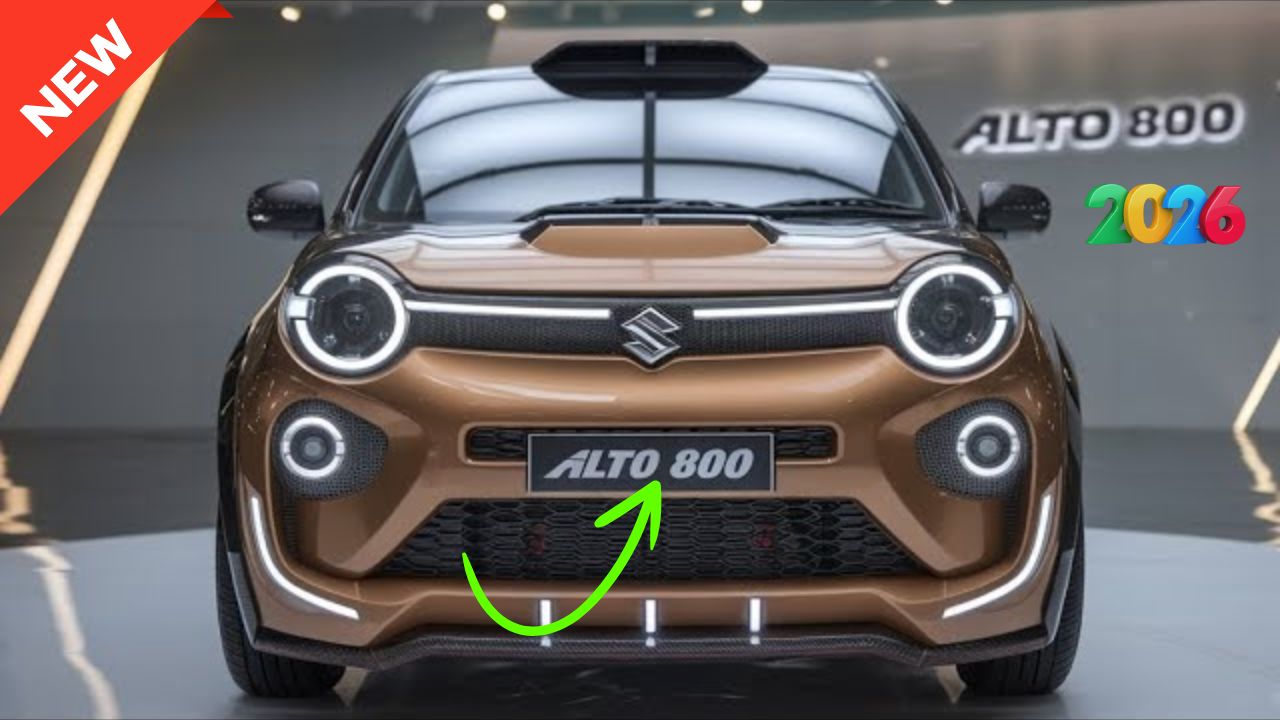
New Maruti 800 2026: In a nostalgic yet forward-looking move, Maruti Suzuki is expected to reintroduce the iconic Maruti 800 nameplate in 2026, reimagined as an ultra-affordable, fuel-efficient entry-level car for budget-conscious Indian families. The new Maruti 800 2026 aims to capture the spirit of the original people’s car while meeting modern safety standards and offering contemporary features at an unbeatable price point.
Expected Price Range and Budget-Friendly EMI Options
The new Maruti 800 2026 is expected to be priced between ₹3.50 lakh to ₹5.50 lakh (ex-showroom), making it the most affordable new car option in the Indian market. This aggressive pricing strategy positions it as an accessible four-wheeler for first-time car buyers, small families, and those upgrading from two-wheelers.
With attractive financing schemes from banks and NBFCs, buyers can own this legendary nameplate with EMI options starting from approximately ₹7,000 to ₹9,000 per month (with standard down payment of 15-20% and loan tenure of 5-7 years, subject to bank approval and individual credit profile).
For the base LXi variant, EMIs are expected to start around ₹7,500 per month, while the top-spec VXi variant may require EMIs of approximately ₹10,000 to ₹11,000 per month. These figures make the Maruti 800 2026 an extremely accessible option for middle and lower-middle-class families seeking safe, affordable motorized transport.
Segment-Leading Fuel Efficiency and Low Running Costs
Fuel efficiency is expected to be the cornerstone of the new Maruti 800 2026, crucial for buyers in this price segment. The claimed mileage figures are:
- Petrol Manual: 28.0 km/l to 30.0 km/l (claimed, ARAI)
- CNG: 38.0 km/kg to 40.0 km/kg (claimed, ARAI)
The CNG variant is expected to deliver exceptional value with running costs estimated at approximately ₹1.80 to ₹2.20 per kilometer, making it one of the cheapest cars to run in India. The petrol variant running cost is expected around ₹3.50 to ₹4.00 per kilometer based on current fuel prices.
For daily commuters traveling 50-60 km per day, the CNG variant could save approximately ₹3,000 to ₹4,000 per month compared to regular petrol hatchbacks, making it highly attractive for budget-conscious families and commercial users.
Engine and Transmission: Simple and Reliable
The new Maruti 800 2026 is expected to feature a modern yet simple engine configuration:
- Engine: 800cc to 1.0-litre, 3-cylinder petrol engine
- Power Output: 48-55 bhp (expected)
- Torque: 65-75 Nm (expected)
- Transmission: 5-speed manual transmission
- Fuel Type: Petrol and factory-fitted CNG option
The engine is designed for maximum fuel economy rather than performance, with adequate power for city driving and occasional highway use. The focus remains on reliability, low maintenance costs, and ease of operation for new drivers.
Exterior Design: Compact Yet Modern
The new Maruti 800 2026 is expected to retain compact dimensions while incorporating modern design elements:
- Front Design: Updated grille with halogen headlamps, possibly body-colored bumper in top variants
- Side Profile: Clean, boxy lines maximizing interior space, 13-inch steel wheels with wheel covers
- Rear Design: Simple tail lamp cluster with reflectors for safety
- Dimensions: Length around 3,500-3,600 mm, width 1,500-1,550 mm, height 1,450-1,500 mm (expected)
- Ground Clearance: Approximately 160-170 mm
- Color Options: 4-5 basic colors including White, Silver, Grey, and possibly Blue or Red
The design philosophy emphasizes practicality and affordability over flashy styling, keeping manufacturing costs low to pass savings to customers.
Cabin Space: Surprisingly Roomy for Four
Despite its compact exterior, the new Maruti 800 2026 is expected to offer practical cabin space:
Seating and Space:
- Seating Capacity: 4-5 seats (though practically suited for 4 adults)
- Front Row: Adequate headroom and legroom for average-height adults
- Rear Row: Comfortable for two adults or three children
- Boot Space: Approximately 150-180 liters, suitable for grocery shopping and small luggage
Interior Features:
- Dashboard: Simple, functional design with basic instrumentation
- Upholstery: Fabric seats with easy-to-clean material
- Steering Wheel: Standard steering (power steering expected in top variant only)
- Climate Control: Manual AC expected in mid and top variants
- Storage: Basic door pockets, glove box, and small storage areas
The cabin prioritizes practicality and ease of maintenance over premium materials, keeping costs low for buyers.
Infotainment and Connectivity
The new Maruti 800 2026 is expected to offer basic yet functional connectivity:
- Music System: Basic 2-DIN music system in base variant, possible 7-inch touchscreen in top variant
- Smartphone Integration: USB connectivity and Bluetooth (in equipped variants)
- Speakers: 2 to 4 speakers
- Charging: USB charging port
- Instrument Cluster: Analog speedometer with basic fuel and temperature gauges
Features are kept simple to maintain affordability while offering essential modern connectivity for younger buyers.
Safety Features: Meeting Modern Standards
Safety is expected to meet current regulatory requirements:
Standard Safety Features (Expected):
- Driver airbag (standard as per regulations)
- ABS with EBD
- Rear parking sensors (in select variants)
- Seatbelt reminder for driver and co-driver
- Speed alert system
- Reverse parking sensors
Additional Features (Top Variant):
- Passenger airbag
- Central locking
- Child safety locks
- Anti-theft engine immobilizer
While not feature-rich, the safety package meets Indian safety norms and provides basic protection for occupants.
Ride Quality and Driving Experience
The new Maruti 800 2026 is expected to offer a basic yet adequate driving experience:
- Suspension: Simple MacPherson strut front and coil spring rear setup
- Ride Comfort: Reasonably comfortable on city roads, may feel bouncy on rough surfaces
- Handling: Light and easy to maneuver in traffic, ideal for new drivers
- Noise Levels: Moderate cabin insulation, some engine and road noise expected
- Braking: Basic braking setup adequate for city speeds
The driving experience focuses on ease of use, fuel economy, and simplicity rather than sporty handling or luxury comfort.
Practicality for Daily Family Use
The new Maruti 800 2026 excels in practical, everyday usability:
Daily Usability:
- City Driving: Compact size makes parking and navigating narrow streets extremely easy
- Fuel Economy: Outstanding mileage reduces daily running costs significantly
- Maintenance: Simple mechanical design ensures low maintenance costs (₹2,000-3,500 per service expected)
- Spare Parts: Affordable and widely available parts
- Easy to Drive: Perfect for new drivers and those uncomfortable with large vehicles
Ideal For:
- First-time car buyers
- Small families (3-4 members)
- Daily office commuters
- Two-wheeler users upgrading to four-wheelers
- Senior citizens needing simple, easy-to-drive transport
- Commercial use like driving schools
Service Network and Ownership Costs
Maruti Suzuki’s extensive service network ensures hassle-free ownership:
- Service Costs: Approximately ₹2,000 to ₹3,500 for regular maintenance
- Spare Parts: Among the cheapest in the industry
- Warranty: Expected 2-year/40,000 km standard warranty
- Insurance: Low insurance costs due to affordable price
Annual maintenance costs are expected to be around ₹15,000 to ₹20,000, making it highly economical for long-term ownership.
Frequently Asked Questions (FAQs)
Q1: When will the new Maruti 800 2026 be launched?
A: The expected launch is in mid-2026, though official dates are pending confirmation from Maruti Suzuki.
Q2: What is the expected price?
A: Expected price range is ₹3.50 lakh to ₹5.50 lakh (ex-showroom).
Q3: What mileage can I expect?
A: Claimed mileage is 28-30 km/l for petrol and 38-40 km/kg for CNG variants.
Q4: Is it suitable for highway driving?
A: While capable of highway driving, the Maruti 800 2026 is best suited for city commutes and short-distance travel. The small engine may feel strained on long highway journeys.
Q5: What are the EMI options?
A: EMIs start from approximately ₹7,000-9,000 per month depending on variant, down payment, and loan terms.
Q6: Is the CNG variant worth buying?
A: Absolutely. The CNG variant offers running costs of just ₹1.80-2.20 per kilometer, making it ideal for high daily usage.